Finding words that a lot of people search for is not the only way to choose a keyword. You need to know why people are searching for those words as well. This is the search intent.
Search intent is the understanding of what a person is expecting to get after typing a query into Google. When your content fulfils that expectation, it’s more likely to be useful, get clicks, and perform well in search results.
What Is Search Intent?
Search intent is the main reason behind a search. For instance, a person searching for “how to create a website” likely wants to learn how to build one. A person looking for “best website builder” might be comparing different options before making a decision.
The words used in a search can give you hints about what the person wants. If you know these clues before picking a keyword, you can create content answering the right question.
Also Read: XML Sitemap: A Simple Guide with Real Examples
Why Search Intent is Important for Choosing Keywords
A keyword may have a high search volume, but that doesn’t mean it is the right keyword for your website. They didn’t get what they expected and so they may leave quickly. Visitors can leave quickly if the intent behind the keyword is not aligned with your content.
For instance, if you sell a service and choose a keyword that people use mostly to find free information, it may not bring the right visitors. Search intent checks allow you to concentrate on keywords relevant to your content, services, products, and business goals.
Learn the Main Types of Search Intent
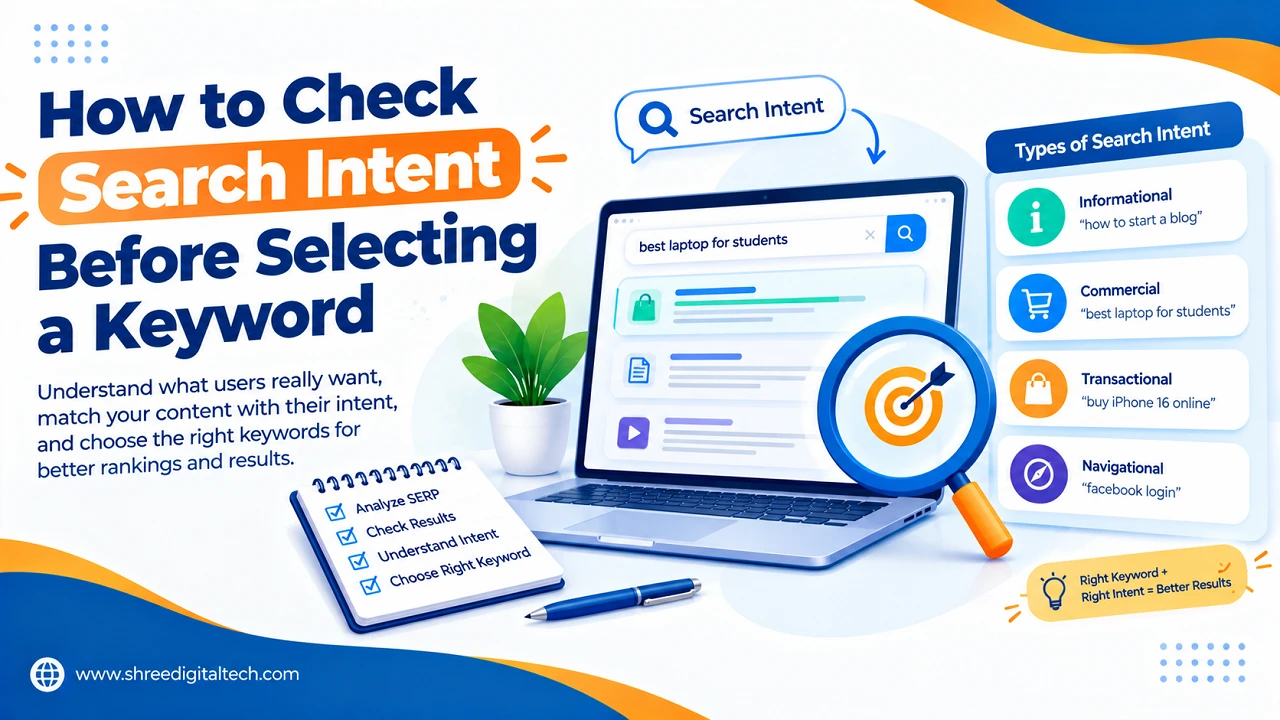
Search intent can usually be divided into four main types:
Informational intent is when people want to learn something. Searches such as “what is technical SEO” or “how does email marketing work” are examples.
Navigational intent happens when someone wants to find a particular website, brand, or page. For example, a person searching for a company name may already know where they want to go.
Commercial investigation intent means the person is researching options before making a decision. Searches such as “best SEO tools” or “SEO agency comparison” can fall into this category.
Transactional intent is when someone is ready to take an action, such as buying a product, booking a service, or signing up for something. Searches containing words like “buy,” “price,” “discount,” or “hire” often show this intent.
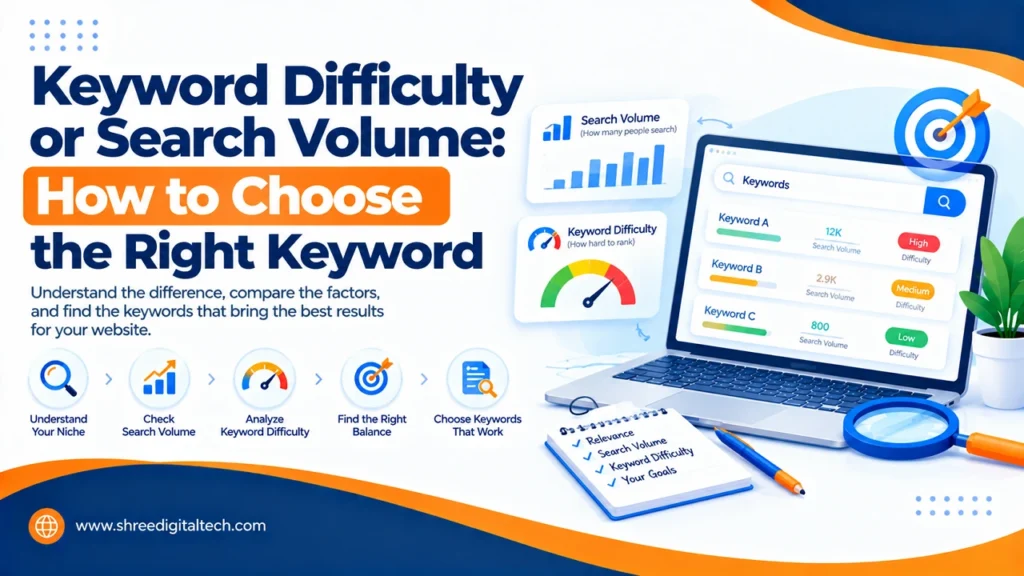
Also Read: Keyword Difficulty or Search Volume: How to Choose the Right Keyword
Use Google to Look up the Keyword
One of the easiest ways to check search intent is to Google the keyword yourself. See the pages displayed on the first page.
Google shows what kind of content? Ask yourself. Is the bulk of the content blog posts, guides, product pages, category pages, service pages, videos, comparison articles?
The results give you a pretty good idea of what users want from that search. If most of the results are detailed guides and you’re creating a sales page, the keyword may not be the best fit for your page.
See the Highest-Ranking Pages
Don’t just look at the keyword itself. Check out the page rank for it.
Look at their titles, headings, length of content, format and the questions they answer. You do not have to copy these pages. Indeed, use them to understand what kind of information searchers are looking for.
If most of the top results explain a topic step-by-step, then your content should probably explain the topic clearly and usefully, rather than just short-answering it.
See the Search Words
Some words can help you know the intent behind a keyword. Words like “what,” “why,” “how,” “guide” generally indicate that users are looking for information.
This can be revealed with words like “best”, “top”, “review” and “vs” if users are comparing options. Words like “buy,” “price,” “order” and “near me” tend to indicate that the user is nearer to conversion.
These words are not the perfect rule, but they can help you understand the search better.
Also Read: Semantic SEO: How It Works and Why It Matters
Make Sure That the Intent Matches the Content
Once you know the keyword, compare it with the page you want to create.
Let’s say you want to promote a web design service. A keyword like “how to design a website,” for example, will draw people who want to learn and do the work themselves. A keyword like “web design services” could be more relevant for a business that offers web design to target.
The right one will depend on your website and your goal. The key is to make sure there is a clear link between search intent and your content.
Look for SERP Features in the Search Results
Google often shows more than the usual website listings. You may see featured snippets, videos, images, local results, shopping results or “People also ask” sections.
These features can give you more information on what users want.
For instance, if Google displays many videos for a keyword, users like visual explanations. Local business results may show a strong local intent in the search.
The full search results can be useful to understand the keyword before you decide to target it.
Use Search Intent When Doing Keyword Research
Build search intent into your keyword research process from the very beginning. Don’t collect hundreds of keywords and then think about what they mean.
For every important keyword, ask three simple questions: What does the user want? What type of page are they expecting? Can my website provide that answer?
If you answered yes to all three questions, the keyword might be a good choice.
Don’t Pick Keywords Based on Search Volume Alone
High search volume can be attractive, but it shouldn’t be the sole factor influencing the decision. A keyword with less searches can bring more useful visitors if the intent is a close match to your content.
For example, a keyword with specific buying intent might be more valuable to a business than a broad keyword with thousands of searches and general intent.
It’s not simply about the numbers, it’s about relevance and intent in good keyword research.
Produce Content that is Search-Friendly
When you know the intent, create the kind of content that users are searching for. To teach, inform, or direct clearly. If users are comparing products, provide useful comparisons and key differences.
If the intent is transactional, make it easy for visitors to act. Clear information about the product or service, price where appropriate and next steps.
The aim is simple: give people what they were looking for when they searched.
Closing Thoughts
Choosing a keyword based on search intent can make your SEO work more targeted. Instead of simply picking keywords with high search volume, you can select terms that actually match what users are looking for.
Search the keyword. Study the top results. Understand the search words. Check the SERP features. Compare the intent with your content. This simple process helps you select better keywords and create pages that are more useful to your audience.
FAQs
Q1. What is search intent in SEO?
Search intent is the reason when someone searches for something on Google. It helps you understand what information, product, service or action the user is looking for.
Q2. How can search intent be verified?
Search the keyword on Google and analyse the top search results. Verify the type of pages that are ranking, the type of content they have, their titles, and the information they provide.
Q3. Should search volume be the main factor when choosing a keyword?
No. Search volume is useful, but relevance and search intent are important too. A keyword with less search volume can be more valuable if it brings the right audience.
Q4. What are the four main types of search intent?
The four common types are informational, navigational, commercial investigation and transactional intent.
Q5. Can a keyword have more than one search intent?
Yes. Some keywords may have a mixed intent. People searching for the same term have slightly different goals, so Google might return different types of results.