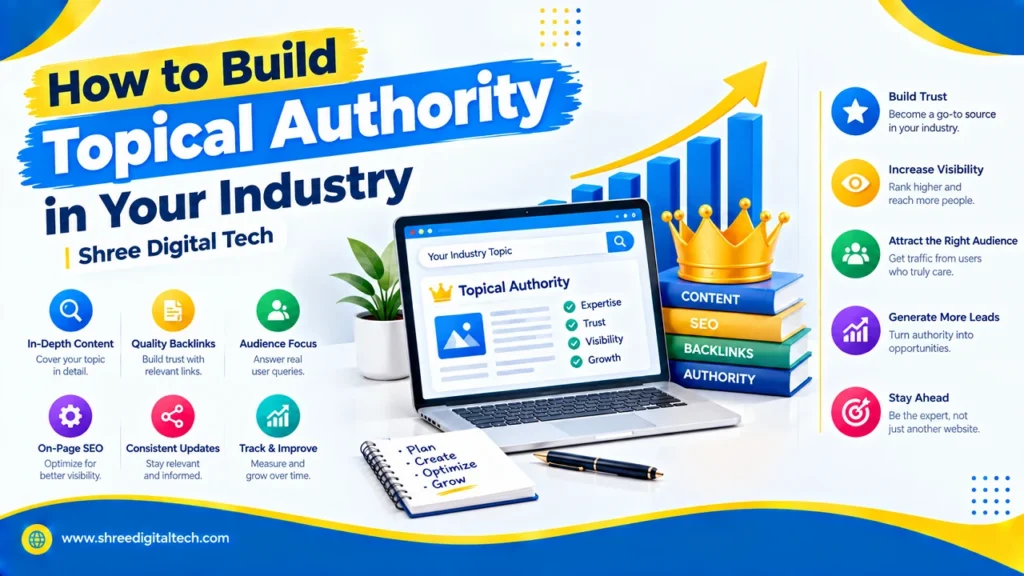
Search engines have evolved significantly. Ranking isn’t about repeating a keyword over and over. Now Google wants to know who really knows a subject. When your website is covering a topic thoroughly and clearly, Google starts to trust you. This trust is known as topical authority.
In this guide, Shree Digital Tech explains what topical authority is, and how you can build it in your own industry, step by step.
What Is Topical Authority?
Topical authority is when your website is viewed as an authority on a particular topic. This is due to the deep coverage of this topic, with accurate, useful and well-linked content.
Think of a doctor who treats only heart problems. People trust that doctor more than a normal doctor for heart problems. Websites work in the same way. A site that has 40 useful articles on “digital marketing for schools” for example, will be trusted more than a site that has one article on ten different topics.
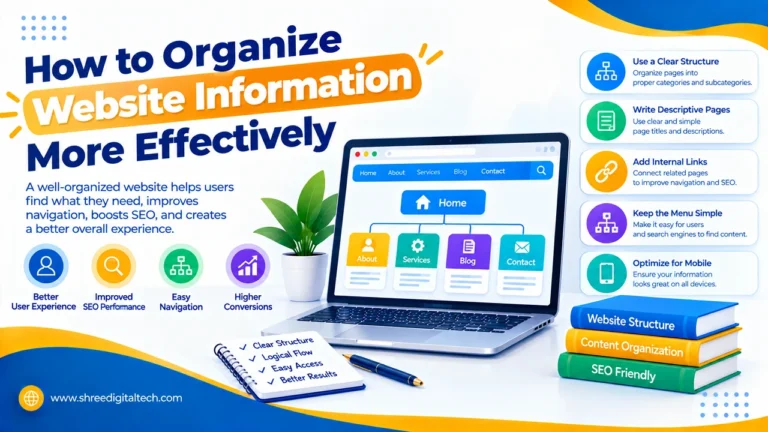
Also Read: How to Organize Website Information More Effectively
Why Topical Authority Matters
1. Smaller sites can compete with big ones. A small website with deep knowledge of one niche can beat a bigger brand that only touches the topic lightly. You do not always need thousands of backlinks to win.
2. You rank for more keywords. When Google sees you as an expert, your pages often show up for many related searches, even ones you never targeted directly.
3. New pages rank faster. Once trust is built, Google tends to test and rank your new content more quickly.
4. Visitors stay longer. When people find all their answers in one place, they read more, come back more often, and trust your brand more.
5. It helps in the age of AI search. Clear, well-organised expertise makes it easier for search engines and AI tools to understand and mention your brand.
Step-by-Step: How to Build Topical Authority
Step 1: Choose One Main Topic
Pick a subject that fits your business and that your audience really cares about. Make sure it is big enough to write many articles about. For example, a fitness brand can choose “home workouts”, and an accounting firm can choose “small business taxes”.
Step 2: Do Topic-Based Keyword Research
Don’t just search for high-volume keywords. Map the whole subject instead. Look at the questions people ask, the problems they have, and the comparisons they make. These can be found by using tools such as Google Keyword Planner and Google Search Console. Also check out competitor websites to see what subtopics they are not covering. Those gaps are your opportunity.
Step 3: Create a Topical Map
A topical map is just a simple plan of everything you need to talk about. Start with the main topic, split it into subtopics and then list the questions under each one. Organise by search intent e.g. learning, comparing, buying. This map tells you what to write, in what order, and how the parts fit together.
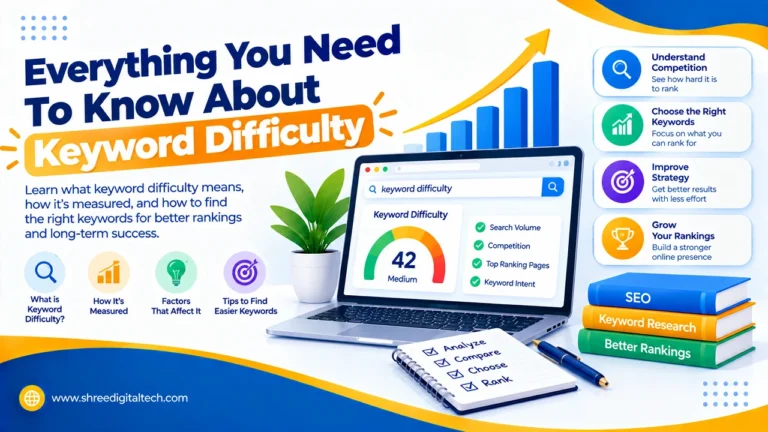
Also Read: Everything You Need To Know About Keyword Difficulty
Step 4: Build Topic Clusters
A topic cluster consists of two parts:
- Pillar page: A big, complete guide on the main topic.
- Cluster pages: Smaller articles that go deep into one subtopic each.
Start with the pillar page, then add supporting articles one by one. This structure shows search engines both the depth and the breadth of your knowledge.
Step 5: Use Smart Internal Linking
Internal links connect your content. Link every cluster page from the pillar page. Link each cluster page to the pillar and to other cluster pages. Use natural, clear anchor text that describes what the linked page is about. Don’t force your links where they don’t belong and check your links periodically to fix broken ones.
Step 6: Write Helpful, Original Content
Each article should answer the reader’s question completely. Match the search intent. Use simple language and add real examples. Share your own experience or case studies or expert opinion where possible. Saying what someone else has said, just repeating it, doesn’t really add much value. Use headings, short paragraphs, and bullet points so it is easy to scan. And don’t keyword stuff, because natural writing works best.
Step 7: Show Experience and Trust (E-E-A-T)
Google is looking for Expertise, Experience, Authoritativeness and Trustworthiness. You can prove these by:
- Adding author names and short bios with real credentials
- Showing publish and update dates
- Fact-checking your content and citing reliable sources
- Explaining who is behind your business
It is even more crucial in sensitive areas such as health, money and safety.
Step 8: Earn Quality Backlinks
Links from reputable, relevant sites still help. Good content, original data and guest posts on relevant sites can bring these links. Keep in mind, too, that internal links are the easiest way to pass strength to your important pages.
Also Read: Why SEO Is a Long-Term Strategy for Better Results
Step 9: Keep Your Site Clean
When your site gets bigger, get rid of or combine old, thin, or duplicate pages. This means search engines will spend their time on your best content. Fix indexing issues and keep your pages loading fast and easy.
Step 10: Update Content Regularly
Topical authority is temporary. You can let it go if you stop taking care of it. Expect to return to your content, updating old facts and examples and adding new subtopics as your industry evolves. Fresh content indicates that you are still active and trustworthy.
How to Measure Topical Authority
There is no single score for it, but you can track progress through:
- Impressions, clicks, and positions in Google Search Console
- Time on page and returning visitors in Google Analytics
- Rankings for many related keywords across one cluster
- Backlinks coming to your topic pages
- Stable top positions over several months
If these numbers grow together, your authority is growing too.
Common Mistakes to Avoid
- Writing on too many unrelated topics
- Publishing thin articles just to increase numbers
- Ignoring internal links
- Never updating old posts
- Copying competitors without adding anything new
Final Thoughts
Building topical authority takes time, but the results are long lasting. Pick a topic, go in depth, connect your pages smartly, and keep improving. Eventually your visitors and search engines will identify you as the expert in your industry.
Whether you need assistance with topical maps, content clusters, or a complete SEO strategy, the team at Shree Digital Tech is prepared to help you grow.
Frequently Asked Questions
1. What does topical authority mean in simple terms?
It means search engines see your website as a trusted expert on one subject because you have covered it deeply and clearly.
2. How long does it take to build topical authority?
Depends on your industry and how often you publish. Most sites get results in a few months but strong authority usually takes consistent work over 6 months or more.
3. What is the difference between topical authority and domain authority?
Domain authority is a general score based mainly on links. Topical authority is how well you cover a single subject. Domain authority can be high, but topical authority can be weak on a site.
4. What is a topical map?
A topical map is a plan that lists all the subtopics and questions about your main subject. It shows you what content you need and how the pages should link to each other.
5. What is a Pillar Page?
A pillar page is an in-depth manual on a general topic. It links to smaller articles called cluster pages that describe each subtopic in more detail.
6. How many articles will I need to create to build topical authority?
There is no definite number. The aim is to completely cover your subject. For some niches that is 15 articles, for others it can be more than 50.
7. Do backlinks still matter?
Yes. Links from relevant and trusted sites help. But good content and good internal linking are very important too, especially for smaller websites.
8.How often should I update my content?
Review these important pages every few months. Update facts, examples and links, and add new questions people are asking now.
9. Can small businesses build topical authority?
Yes. In fact, it’s one of the best ways for small businesses to compete. By focusing on one niche, you can outrank larger sites that only lightly cover the topic.
10. What tools track topical authority?
Google Search Console and Google Analytics are good free choices. Paid SEO platforms can also assist with keyword research, topical mapping and rank tracking.
Ask AI about this article
Get a quick summary or ask follow-up questions.

Akash Yadav
Part of the Shree Digital Tech team, helping businesses in the USA, UK, Canada, Australia, Europe and India grow with SEO, paid media, content and websites.