Introduction
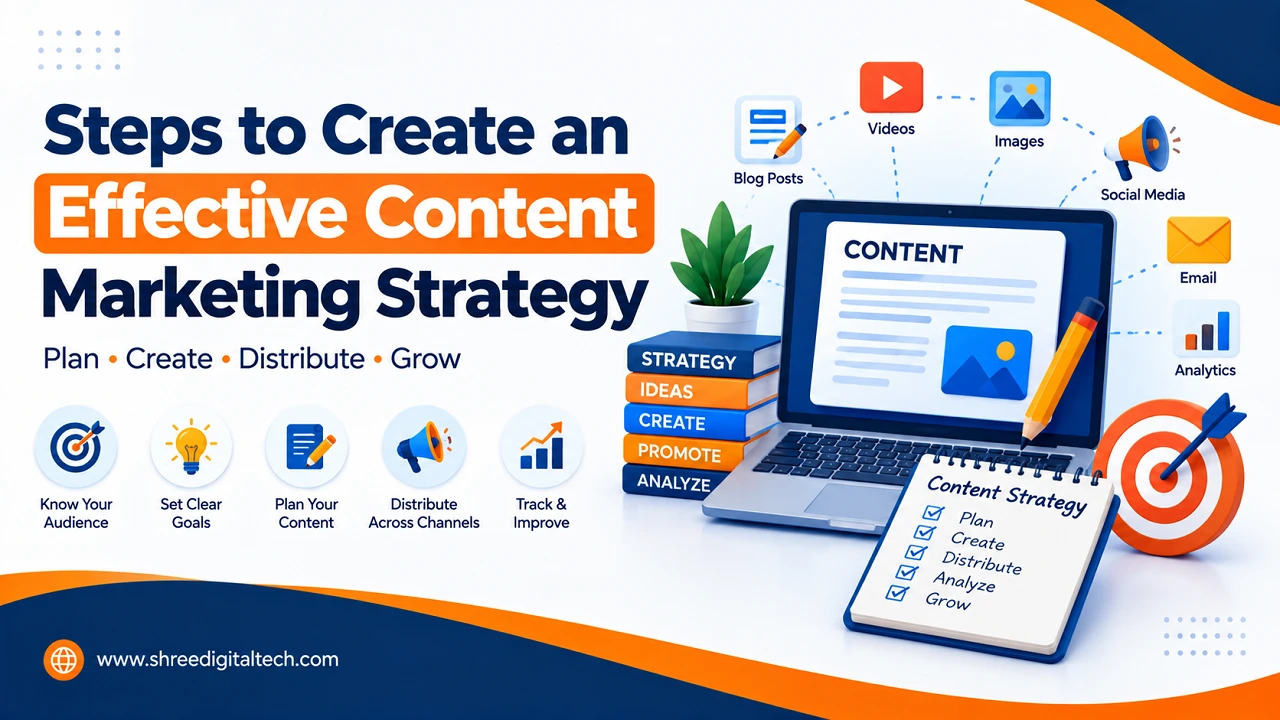
Content marketing is more than just writing blog posts and posting on social media platforms. It’s a strategic way to create and distribute content that allows you to connect with your audience and grow your brand. Whether you are building a strategy for someone’s business or your own personal brand, the process is always the same basic idea: know your goal, know your audience and create content to help them.
In this article, we’ll look at easy steps that you can follow to build a solid content marketing strategy.
1. Set a Clear Goal at the Start
Every great content strategy starts with a clear mission. Why am I doing this? Ask yourself. Who do I help? What sets my content apart from others?
Your mission should state who you are, what you do, what you stand for and what makes you special. This mission is like a compass. It helps keep your content on track, and keeps you from writing random posts that don’t tie into your bigger goal.
2. Write a Simple Content Mission Statement
Once your core mission is ready, create a short content mission statement. It should explain three simple things:
- Who should see your content
- What sort of information or value are you going to give them
- What advantage would they get from your content
There is no need for long paragraphs here. It only takes two or three short sentences to set the stage for your future content.
3. Set Clear Goals
You can’t have content without a goal. The goals typically include creating brand awareness, gaining trust, increasing loyal followers or getting more sales and leads. You can also target partners, guest opportunities or new customers.
Choose goals that are in line with what you really want to achieve. And ensure that every content you create is going to help you achieve at least one of those goals.
4. Understand Your Audience
But you can’t create useful content if you don’t know the people you’re creating for. Figure out what your audience does for a living, what they’re interested in, what issues they have, and where they spend time online.
For example, if your audience is marketing managers in the finance industry, you might find that they check LinkedIn often but rarely use Facebook and that they want to learn how to get support from their company leaders. These types of details help you to create content that really speaks to them.
5. Identify Content That’s Suitable for Your Audience
Make two circles in your mind. One circle is the things you know and love to create content on. The other circle is what your audience really wants to know about. Your “sweet spot” is where the two circles overlap in the middle. This is where your best content ideas are going to be coming from.
Also at this stage, decide on the best format for your content, such as blogs, videos, podcasts, infographics or social posts, based on what your audience prefers to consume.
6. Select Suitable Content Types and Channels
Different types of content work for different purposes:
- Blogs are good to build trust and search rank.
- Videos are great for product demos, storytelling and creating an emotional connection.
- Podcasts are great for long conversations that build trust with a niche audience.
- Social media helps you connect with people quickly and share content widely.
- Infographics are a great way to explain data or steps in an easy visual way.
Once you’ve decided on your content types, decide where you’ll publish and share them. This could be your own website and email list (owned channels), guest posts and media coverage (earned channels), and paid ads (paid channels).
7. Match Your Content to the Buyer’s Journey
People go through three steps before taking action: awareness, consideration and decision.
- In the awareness stage, they are just discovering a problem. Simple, helpful blog posts or videos work well here.
- At the consideration stage they are considering their options. They help you assess with how-to guides, webinars, infographics.
- In the decision stage they are prepared to decide. Case studies, testimonials, demos push them into action.
By creating content for each stage, you keep your audience engaged from the very first visit all the way through to conversion.
8. Create a Content Plan You Can Follow
Once you have your topics and formats, start planning a content calendar. Be realistic with how much content you can actually create and publish on a regular basis. It’s better to regularly publish one good blog post a month than to promise weekly content and quit after a few weeks.
9. Establish Clear Objectives and Monitor Progress
Set goals that include real numbers. For example, if your goal is to build trust, you might want to get 50 new newsletter subscribers in three months. Common ways to measure success include website traffic, engagement (likes, shares, comments), conversion rates and email sign-ups.
Review your results regularly. If something isn’t working, don’t be afraid to change your numbers or your approach.
10. Regularly Review and Update
Some parts of your strategy, like channels, topics, and content formats, should be looked at and changed at least once a year, or more often if you’re just starting out. Your mission and main goals should stay the same.
Conclusion
Building a content marketing strategy doesn’t have to be hard. You just need a defined mission, a good sense of who your audience is, realistic goals and a plan that you can actually follow. Begin small, stay consistent, and be flexible as you discover what your audience responds to best.
Common Questions
1. What’s a Content Marketing Strategy?
It is a plan that explains why you create content, who it is for and how it will help your business or personal brand grow.
2. Why is a content marketing plan required?
It gives direction to your content. Without a strategy, you can create random content that does not build trust or deliver results.
3. What is the difference between a content strategy and a content plan?
It tells people “why” you’re doing something and where you want to go in general. A content strategy is more tactical; it lays out the exact content you are going to produce, when and by whom.
4. How often should I review my content marketing strategy?
Your mission and main goals should not change much, but you should review things like channels, topics and formats at least on a regular basis.
5. What kind of content should I use?
That depends on your audience and your goals. Blogs for SEO and trust, videos for stories, podcasts for deeper engagement, and infographics for simplifying data.
6. How do I know if my content marketing strategy is working?
Track metrics like website traffic, engagement, conversion rates, and email sign-ups. Regularly compare these figures against the goals you set.