About Artificial Intelligence (AI)
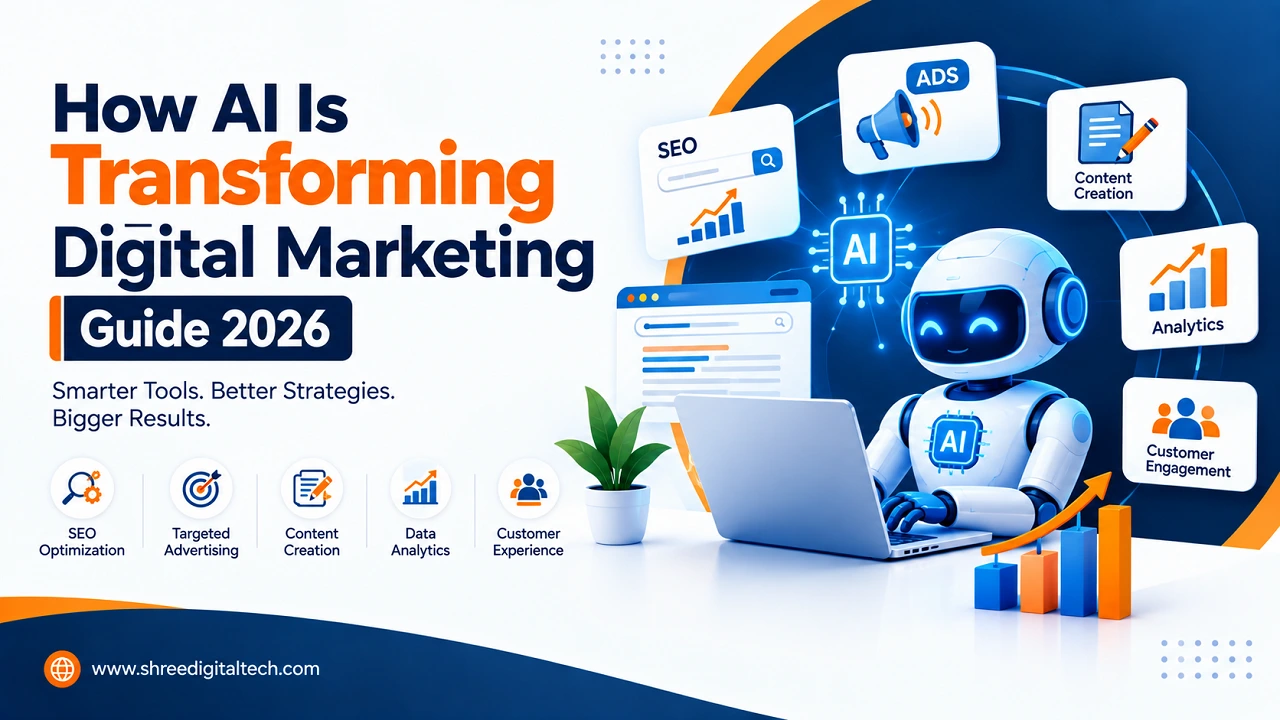
Artificial intelligence isn’t a “future” idea in business anymore. This is already a big part of how brands plan, run and maximise their campaigns today. “AI tools are now integrated into the daily marketing work, from writing ad copy to predicting what a customer is going to buy next.” In this guide we’ll explore how AI is transforming digital marketing, the sectors where it’s making the biggest difference, and what businesses can do to leverage it the right way.
The Significance of AI in Marketing Today
That was a few years ago, when automations were as simple as scheduling social posts or basic email responses. Today artificial intelligence systems can evaluate vast amounts of customer data in real time, predict what a person might do next, generate content and even optimise an entire campaign with little manual effort . This shift means marketing teams now work with data experts and AI tools for better, not just faster, results.
Key Areas Where AI Is Transforming Digital Marketing
1. Personalisation on a Broader Scale
Brands want to know their customers. AI looks at what a person has looked at, bought, and how they’ve interacted with a brand in the past to show them content and deals that feel more relevant to them, rather than ads that are sent to everyone.
2. Content Creation Gets Faster
Good content remains core to marketing, but AI has revolutionised how it’s produced. Tools can now write blog posts, ad copy, video scripts, social captions in minutes. It’s not a replacement for a human writer, but it does speed up the first draft stage a lot.
3. Customer Behaviour Prediction
Predictive analytics can help businesses estimate the likelihood of someone buying, when a customer may stop using their service and how demand can change with seasons or trends. This allows brands to be proactive rather than reactive.
4. Better Paid Advertising
It makes running ads much more accurate. Machine learning now does bidding, audience targeting and ad placement, which helps lower the cost of getting a new customer while making ads more relevant to the people who see them.
5. Conversational Marketing and Chatbots
Chatbots have come a long way in AI. They now answer questions, offer product recommendations and provide customer support on websites and messaging apps, around the clock. That means faster responses and happier customers without a large support team.
6. AI in Advertising and Automation
Even before the recent explosion of AI tools, digital ads have always involved simple forms of automation. Programmatic advertising is the use of algorithms and big data to automatically serve the right ad to the right person, with the least amount of wasted ad spend.
Emerging Trends That Are Shaping AI Marketing
- Voice and Visual Search: As more people are using voice assistants or images to search, brands are optimising content to show up in these new search formats.
- Real-time sentiment tracking: AI tools monitor social media to understand how people currently feel about a brand, enabling marketers to quickly adapt their messaging.
- AI-powered influencer marketing: Brands use AI to identify influencers whose audience and engagement are authentic to campaign goals.
- Automated video production: AI now aids in creating video ads, captions and even personalised video messages faster.
- Responsible AI: As automation increases, transparency, bias avoidance and compliance with data privacy are as vital as the technology itself.
How Companies Can Begin to Use AI the Right Way
- Set goals – Decide if you want more leads, better retention, lower costs, or more personalised experiences.
- Choose the right tools – Choose AI tools that match your real needs – like a smart CRM, an ad optimisation platform or a content generator.
- Organise your data — AI is only as good as the data behind it, so clean, secure data storage is a big deal.
- Train your team – Marketers need to be trained to know AI insights and how to use the automation tools correctly, not just turn them on and forget about them.
- Check results regularly – artificial intelligence systems get better over time so campaigns should be checked from time to time for performance, bias and compliance.
Where AI Still Needs Human Input
While artificial intelligence is able to produce a report or an initial draft from data alone, things like empathy, storytelling, and genuine emotional connection are still things that machines cannot fully accomplish. The businesses that get the best results are the ones that see AI as a helper rather than a substitute for human creativity. However, too much automation can make marketing seem less personal, which is the opposite of what you want.
Benefits and Challenges Overview
Benefits: For better targeting, greater engagement, improved conversion rates, lower marketing costs, more rapid campaign execution and greater customer loyalty through consistent, data-driven interactions.
Challenges: Data privacy issues , high set-up costs for small businesses , lack of skills in marketing teams , and the risk of losing the human, creative aspect to marketing if automation is over-used.
The Road Ahead
More autonomous campaigns, AI that can read emotional signals, real-time dynamic pricing and even immersive AR/VR-driven marketing experiences are the future. As this technology matures, AI is likely to make marketing more intelligent, predictive and customer-centric.
Summary
Artificial intelligence has certainly made its impact on digital marketing, whether it is analytics, content creation, advertising or customer support. Brands that use these tools wisely, but still keep the human side of marketing alive are the ones most likely to stay ahead in a fast-changing digital world.
FAQs
1. How will AI change digital marketing in 2026?
AI is enabling personalised marketing, automating content creation, enhancing data analysis, optimising paid ad targeting and improving customer support through smart chatbots.
2. What is AI marketing tools?
Such as automation platforms, predictive analytics software, AI content generators, smart CRM systems and ad spend and targeting optimisation tools.
3. Will AI take over the role of marketers?
No. AI does repetitive tasks and data analysis, but human creativity, storytelling and emotional understanding are still needed for real connection with customers.
4. What industries benefit the most from AI in marketing?
The biggest benefits of AI-powered personalisation tend to be in industries that have lots of customer data, such as e-commerce, finance, healthcare, travel, and retail.
5. What are the dangers of using AI in digital marketing?
Major risks include data privacy concerns, algorithmic bias and over-reliance on automation. We may reduce these risks through proper AI governance and regular monitoring.