Introduction
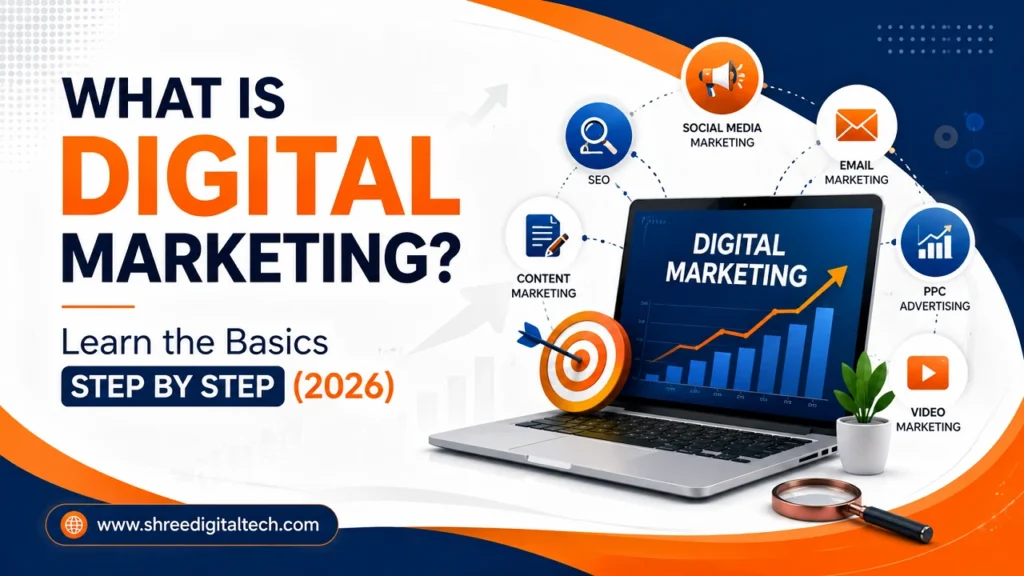
Running a small business without digital marketing today is like opening a shop in the middle of a desert and hoping people walk in. Customers look for things, compare prices, read reviews, and scroll through their social feeds online before they even call you. The good news is you don’t need a big budget or a costly agency to compete. You need to concentrate.
Now more than ever small businesses have more marketing tools than ever before, but access doesn’t create results. Digital marketing without a clear plan is wasting time and money: a lot of activity, very little impact. The following are some strategies that can be used with limited budgets and limited hours but that focus on consistency and measurable results.
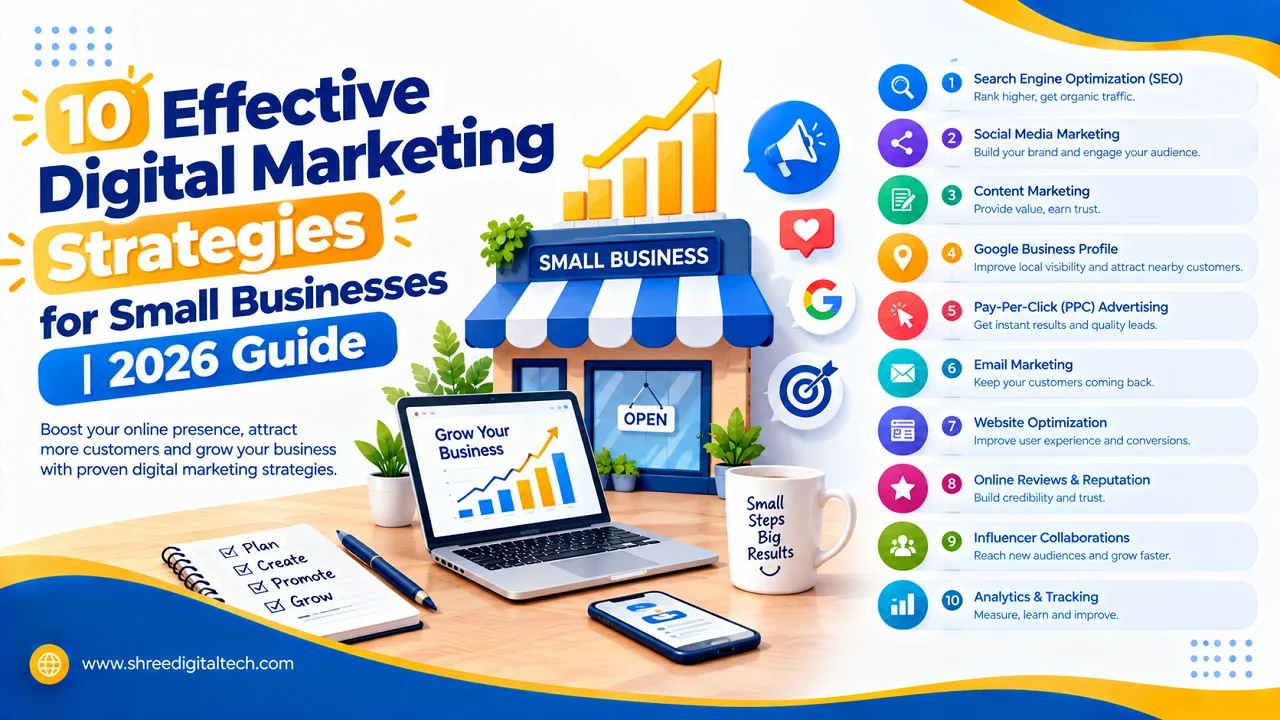
Build a Solid Website Foundation
Your website is your business’ digital home. If it takes forever to load, looks old or breaks on a phone, visitors leave within seconds. Pay attention to fast load speed, mobile responsiveness, easy navigation, and clear call-to-action buttons. Get this working first. All the other channels you’re advertising on will feed traffic here eventually.
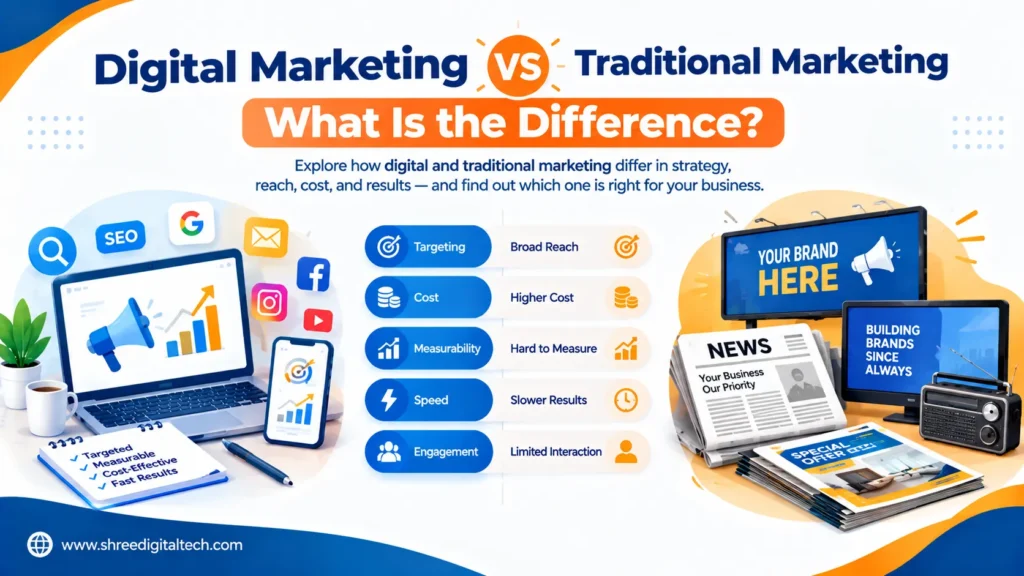
Also Read: Digital Marketing vs Traditional Marketing: What Is the Difference?
Master Search Engine Optimization (SEO)
SEO brings in people who are actually looking for what you have for sale, so it is some of the highest-intent traffic you can get. Target the keywords that your customers actually type. Write genuinely useful pages around those words. Keep your titles and descriptions clean. Build a few quality backlinks. The results take months to show, but the traffic compounds and you own the asset.
Win Local Search
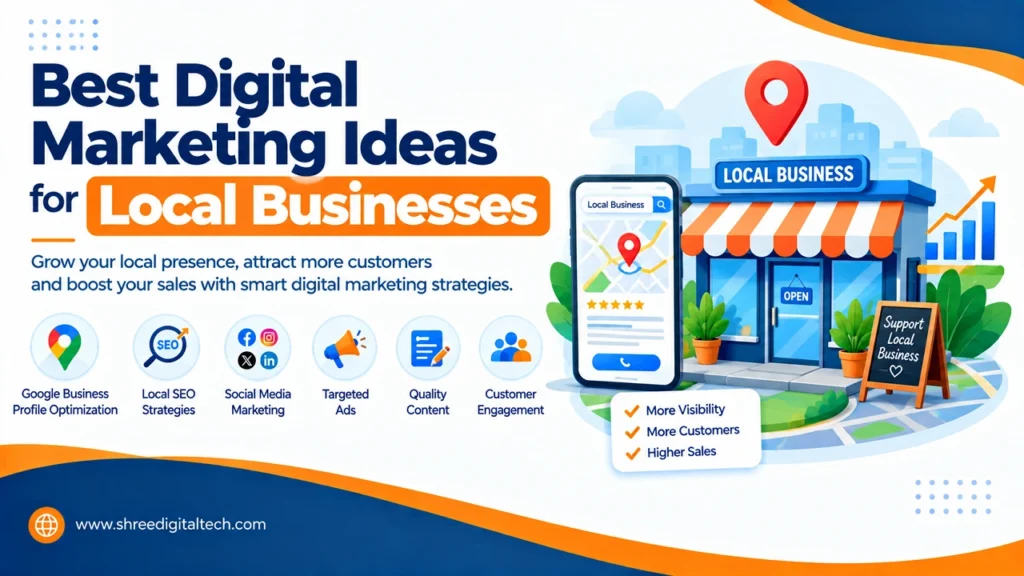
Local SEO is the fastest way to qualify leads for any business that serves a given geographic area. Fill out and verify your Google Business Profile, ensure your NAP is consistent across all platforms, post content that is relevant to your location, and actively ask your happy customers to leave you reviews. The simplest customers to convert are those who are nearby and have immediate intent.
Optimise for AI Search (GEO)
Now, many people do their research with AI assistants before they even open a search engine. Generative engine optimization means structuring content so artificial intelligence systems can read and cite it: clear headings, direct answers to real customer questions, concise facts and visible expertise. Companies that do this consistently will appear in AI-generated answers, not just blue links.
Also Read: Best Digital Marketing Ideas for Local Businesses
Build Authority with Content Marketing
Trust is built before you even have the sales conversation. A pillar page is a practical model that covers your core topic, with smaller articles that answer specific questions. Don’t publish in bursts, publish steadily. Over time this changes your site from a brochure into a demand engine.
Do Well on Two Social Platforms
Trying to be everywhere tends to yield poor results everywhere. Pick one or two platforms where your audience actually hangs out. Answers, tips, behind-the-scenes looks, and real examples of your work are all good things to post. The bulk of discovery is still coming from short-form video. And respond to comments. Engagement is what makes a broadcast channel a relationship.
Create Your Own Email List
One algorithm change can destroy your social reach overnight. e-mail can’t. Provide a simple incentive to gather addresses and then unleash automated welcome sequences, segmented offers and re-engagement campaigns. Email has long been considered one of the most cost-effective channels with the highest returns by small business owners.
Run Paid Ads With Discipline
Paid advertising only works when it fits into the customer journey. Search ads reach people ready to buy, social ads build awareness earlier in the cycle. Start small, test a few variations, track conversions correctly and only scale what works. Ads amplify a working offer, they don’t fix a broken offer.
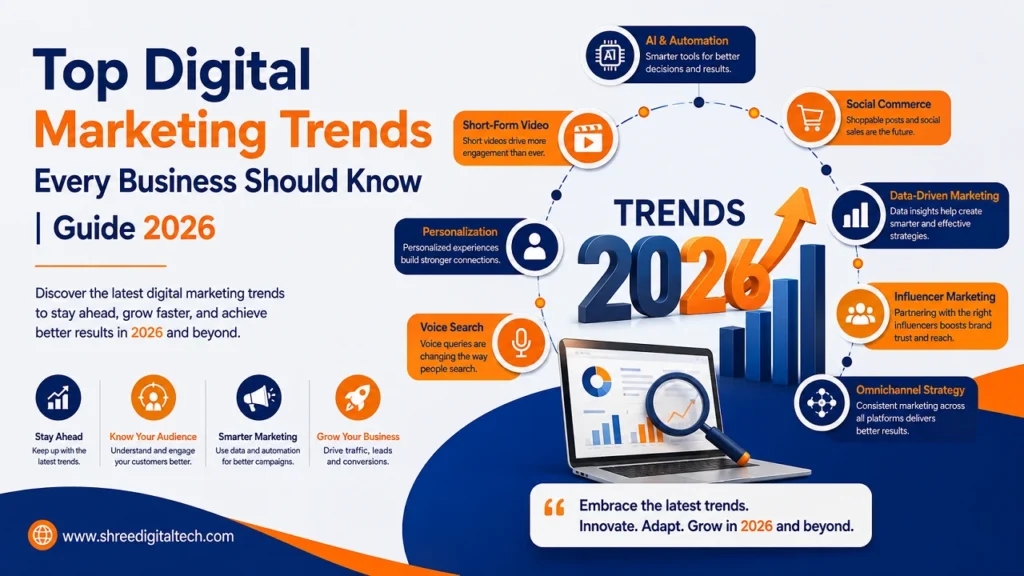
Also Read: Top Digital Marketing Trends Every Business Should Know | Guide 2026
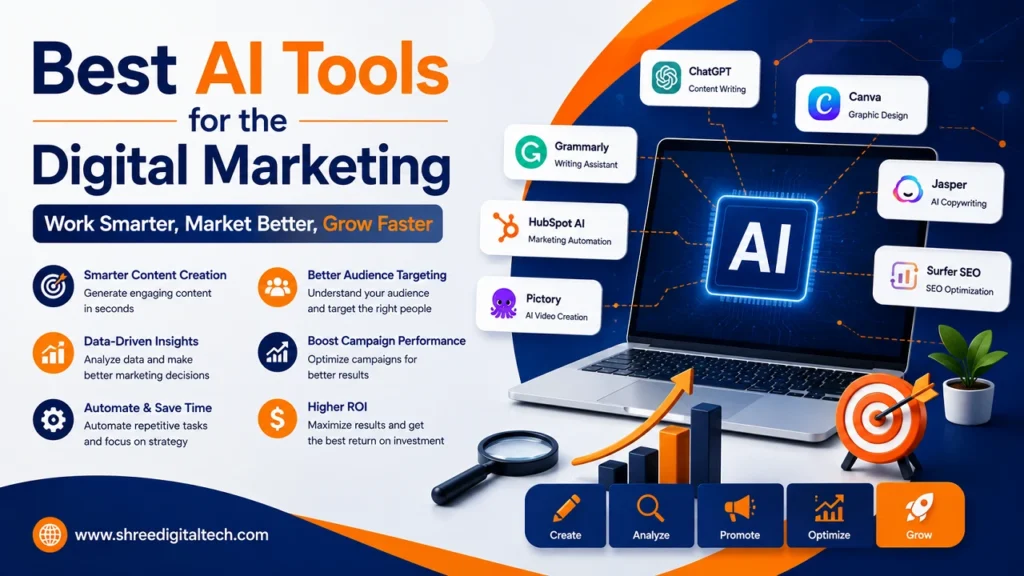
Use AI To Do The Heavy Lifting
AI tools can generate content outlines, turn one blog post into 10 social posts, write ad variations, and summarise campaign data. Used well, they provide a one-person marketing team with the output of a small department. Preserve human editing for accuracy and brand voice.
Measure What Actually Matters
Measurement separates growth from spent budget. Track website traffic and its sources , conversion rate , cost per lead , return on ad spend , revenue attribution and your frequency in AI answers . The point is not more data. It’s better to decide where to put your next rupee or dollar.
Common Mistakes to Avoid
Most small business marketing fails not for lack of effort. They fail because the effort is distributed. The usual suspects: spreading a small budget too thin over too many channels, never setting up conversion tracking, relying only on social media, ignoring mobile experience. Get these right and you get more out of what you’re already doing, without spending more.
Final Thoughts
With digital marketing, patience and focus pay more dividends than budget. Choose a few channels, do them consistently, measure honestly and cut what doesn’t work. That kind of discipline, consistently applied for a year, adds up to a real competitive advantage.
FAQs
1. What is the most cost-effective way to do digital marketing?
SEO and email marketing, because they both create assets you own. They take longer to get off the ground than paid advertising, but once they do, they generate traffic and revenue at a very low incremental cost.
2. How much does a small business need to spend on digital marketing?
There is no universal number. Start with a small budget in two or three channels, measure results for 60-90 days, then move money toward what’s clearly working.
3. How soon will I see results?
Paid ads generate leads in days. Usually, SEO and content marketing take some three to six months to start showing momentum and then just keep getting better.
4. Do I need to be on all social platforms?
No. Two platforms executed consistently will beat six neglected ones every time.
5. How do I measure ROI?
Set up analytics, define your conversion events, and follow the path from first visit to final action so you can see which channels genuinely produce revenue.