When you decide to build a website, one of the very first choices you face is choosing the correct type of website structure. This choice impacts the speed, cost, security and how easy your site will be to manage in the future. Websites are normally classified as either static or dynamic. Knowing the difference between the two will allow you to make an informed decision for your business or personal project.
What Is a Static Website?
Static websites are made up of pages that don’t change. They are made with HTML, CSS, and sometimes JavaScript for animations or simple interactions. Everyone sees the same thing and nothing changes unless someone actually edits the code and uploads it again. The browser just loads the pre-built page directly, there is no database and no server-side processing.
Static sites are great for simple digital brochures, portfolios, one-page business sites and landing pages that don’t need frequent content changes.
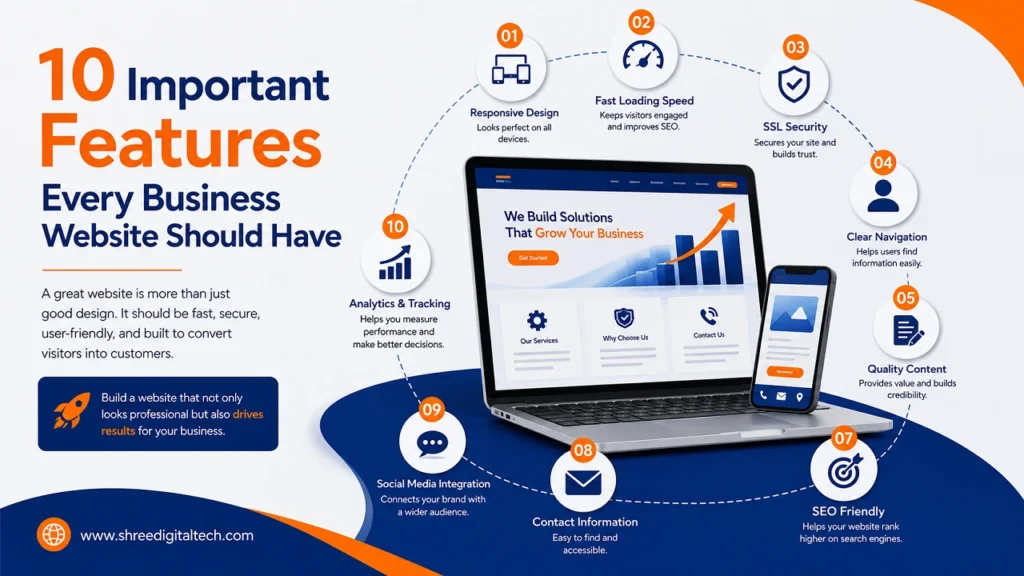
Also Read: 10 Important Features Every Business Website Should Have
Benefits of Static Websites:
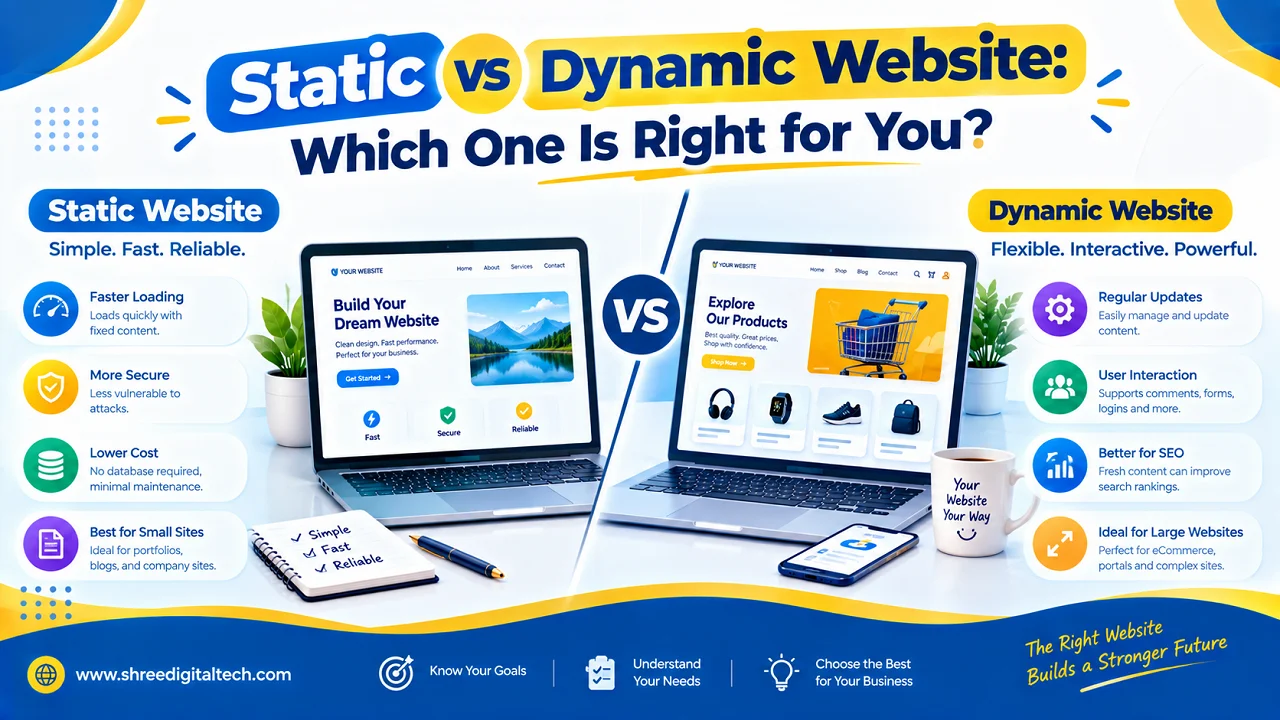
- Fast loading speed – Pages are pre-built and no database queries are required so they load fast.
- High security – No database or server-based scripts means less weak points to attack for hackers.
- Easy to develop – They don’t require advanced programming knowledge, so beginners can easily develop them.
- Low cost – Generally, the costs of hosting and development are much lower as the requirements are minimal.
- Dependable – Fewer moving parts mean fewer things that can go wrong.
Drawbacks of Static Websites:
- To change content, you have to edit each page by hand, which gets hard as the site gets bigger.
- Limited features — things like user logins, personalised content, or search functions are hard to add without some additional coding.
- Not the best for sites that need to scale up with lots of pages or frequent updates.
What Is Dynamic Website
A dynamic website is generated in real time by server-side programming languages such as PHP, Python, or Node.js and a database. It doesn’t have to display the same fixed page to everyone, but can serve different content to different users based on their location, login status, or previous activity.
Dynamic websites are the powerhouses behind e-commerce stores, social media sites, news sites, blogs and pretty much any site that regularly updates its content or needs to react to user actions.
Benefits of Dynamic Websites:
- Personalisation – Content can be customised for each visitor. Examples include product recommendations on Amazon or a personalised news feed.
- Easy content updates – A Content Management System (CMS) like WordPress allows non-technical users to add or edit content without touching code.
- More advanced features – User accounts, shopping carts, comment sections, and search bars all included.
- Scalability – Dynamic sites are designed to grow, to accommodate more pages, more traffic, more features over time.
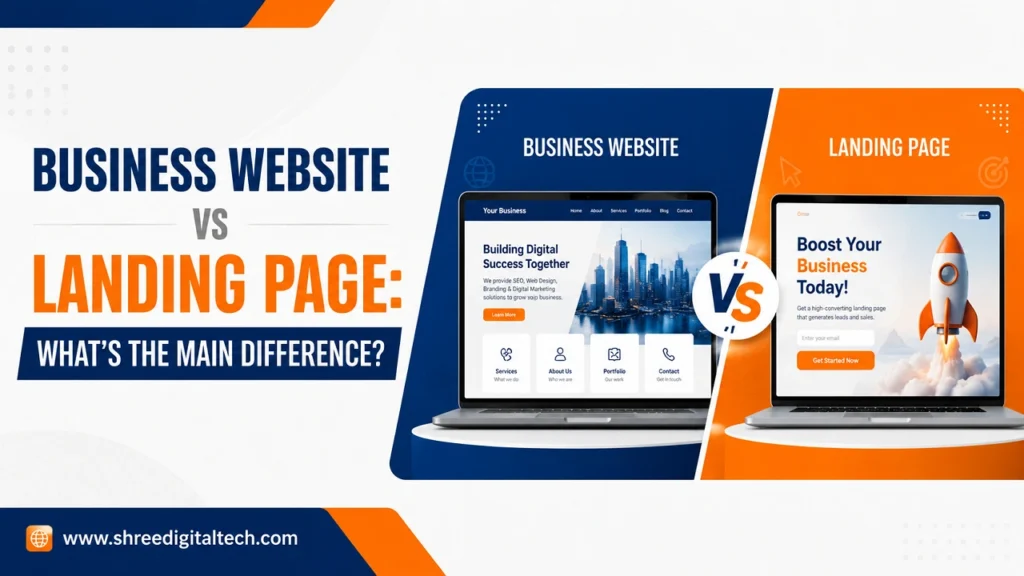
Also Read: Business Website vs Landing Page: What’s the Main Difference?
The Disadvantages of Dynamic Websites Are:
- It is usually more expensive to develop and maintain them because it requires skilled developers.
- They rely on databases and server-based processing which can cause them to load a little slower unless well optimised.
- More components (databases, scripts, plugins) mean more potential security risks if not handled carefully.
Key Differences at a Glance
| Feature | Static Website | Dynamic Website |
| Content | Fixed, doesn’t change | Changes based on user or data |
| Development | Simple | More complex, needs coding and database |
| Speed | Very fast | Can be slower without optimization |
| Security | Generally safer | Needs extra security measures |
| Cost | Lower | Higher |
| Updates | Manual | Easy via CMS |
| Best for | Portfolios, brochures, landing pages | E-commerce, blogs, social platforms |
How to Choose the Best One for You
1. Imagine your goal. Ask yourself what does your website need to do – inform, sell, entertain or provide a service. This will guide your decision making.
2. Consider your content needs. A static site works well if your content doesn’t change too often. If you’re going to be adding regular blog posts, products or updates go dynamic.
3. Think about interactivity. Want user logins? Comment sections? Personalised recommendations? That means a dynamic setup.
4. Review your budget and timeline. Static sites are cheaper and faster to deploy. Dynamic sites take more time and money to build but offer more long term flexibility.
5. Consider future growth. If you expect your website to grow and have more pages, users or features in the future, a dynamic website will scale quite a bit better.
There’s no universal “better” choice – it is based on what you’re trying to do. A static site might be fine for a simple website for a small business, but a growing e-commerce brand will need the flexibility of a dynamic one.
Frequently Asked Question
Q1. Can a static website be converted to a dynamic one later?
Yes, you can, but that usually entails re-doing much of the site with a database and server-facing code, so think ahead if you think you might have any growth in the future.
Q2. Which one costs more to maintain Static or Dynamic?
In general static websites are less expensive to maintain because they don’t require a database, ongoing server-side updates or complex security patches.
Q3. Are dynamic websites always slower than static sites?
Not necessarily. Dynamic sites can be made to load almost as fast as static sites, with the right optimisation, caching, and good hosting.
Q4. Is WordPress a static website or a dynamic website?
WordPress is a dynamic platform in that it uses a database to store and manage content but it can also be used to create static style pages.
Q5: Which is better for SEO?
Both can rank in the search engines when built right. Static sites are generally faster, but dynamic sites can be more flexible with content, which can help SEO over time.
Q6. Do I need coding knowledge to build either type?
Static sites can be created with basic HTML/CSS skills or with simple website builders. Dynamic sites often require more technical skills, or a CMS such as WordPress.