Introduction
Your website is often the first “meeting” a customer has with your business, before they ever pick up the phone or come into your store. When someone lands on your homepage, they have about 5 seconds to decide if your business appears trustworthy, professional and worth their time or if they should hit the back button and try a competitor instead.
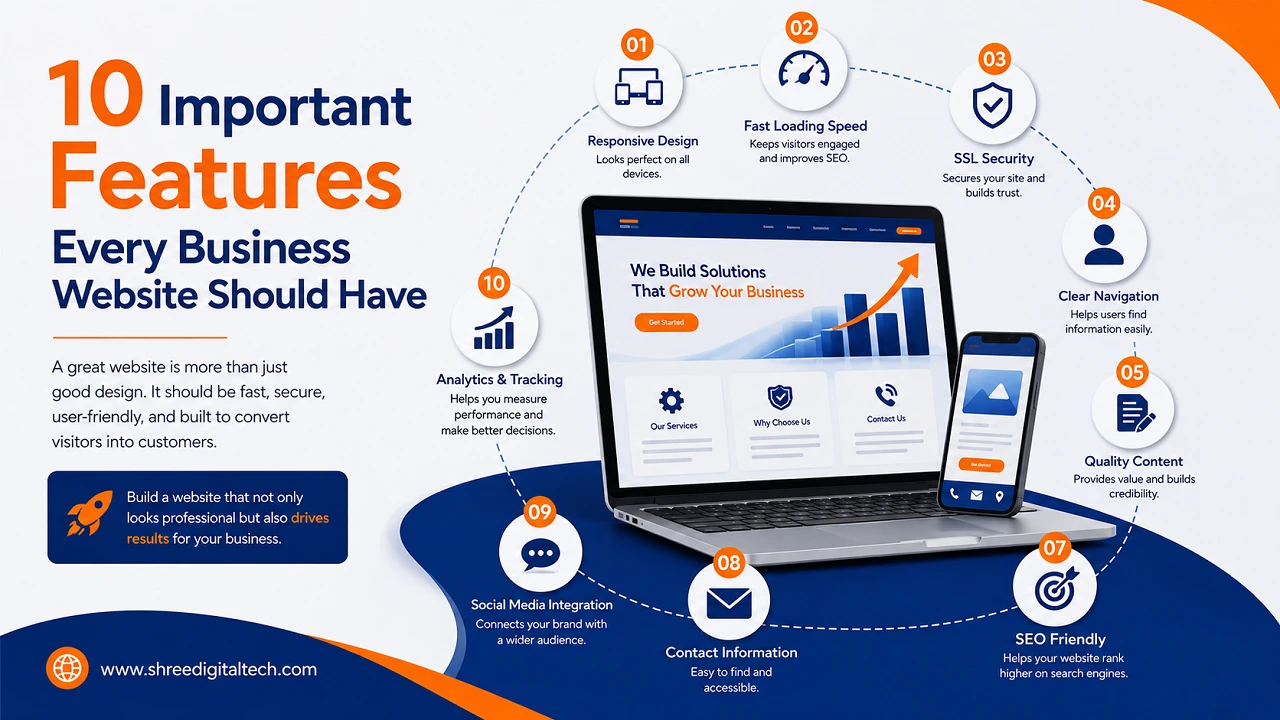
So, your website can’t just look good. It needs to work for your visitors for your business goals. Here are the 10 features that set apart a quietly lead-generating website from one that just sits there looking pretty.
1. Responsive Design That Works on Phones
More people surf the net on their phones than on their desktops these days. If your site doesn’t adapt properly, if text is too tiny to read, or buttons are too close to tap accurately, you’re losing visitors before they even get to see what you have to offer.
A good responsive website will fluidly adapt its layout, images and navigation for phones, tablets and desktops. Search engines also pay close attention to how your site performs on mobile devices when determining where to rank you, so this is no longer optional – it’s the baseline.
2. Quick Loading Speed
Nobody likes to wait. Most visitors will simply leave if your pages take more than a few seconds to load – often without even realising they consciously made the choice to leave. You know, it just feels frustrating and frustration doesn’t turn into customers.
There are a number of things that affect the speed of a page, such as the size of the images, the quality of the hosting and how much unnecessary code is running in the background. Not only does a better user experience help, but keeping your site lean and well-optimized also plays a part in how search engines rank you.
3. Simple & Clear Navigation
Think of your website navigation as a signpost to help your visitors navigate your business. If people can’t easily find what they are looking for your services, your prices, your contact information – they will think your company is disorganised and they will leave.
A good navigation menu is short and clearly labelled and consistent throughout each page People should never be more than two or three clicks away from the information that is most important to them.
4. Strong Security (HTTPS and More)
Would you put your phone number or email into a website that doesn’t look secure? Most people wouldn’t do that. HTTPS encryption is now a baseline expectation, not a luxury feature — browsers actively warn users if a site doesn’t have it.
In addition to HTTPS, your website software, plugins and forms should be regularly updated and monitored. The security shouldn’t be an afterthought as small businesses are often targeted by cybercriminals since they are assumed to have weaker protection.
Also Read: Top Digital Marketing Trends Every Business Should Know | Guide 2026
5. SEO-Friendly Structure
You may have the most beautifully designed website in the world, but if search engines can’t understand it, potential customers will never find it. That’s where SEO-friendly structure comes in, things like clean URLs, proper heading tags, descriptive page titles, alt text on images, and a logical internal linking structure.
That groundwork not only helps you rank on Google — it helps AI-powered search tools understand and accurately represent your business when people ask questions related to what you offer.
6. Clear Calls-to-Action (CTAs)
Every page on your website must answer one simple question for the visitor: “What do I do next?” You’ll see a call-to-action button telling people what to do next — “Get a Free Quote,” “Book a Consultation,” “Call Now,” or “Contact Us.”
Without a clear CTA, visitors might read your content, get interested and then just leave because nothing told them what to do next. Position CTAs where they naturally fit in the visitor journey, not wedged into every nook and cranny of the page.
7. Content That Is Utilising and Trustworthy
Good design catches the eye, but good content builds trust and answers questions. On every important page, most importantly your service pages, you need to clearly articulate what you do, who it’s for, how it works and why someone would choose you over the competition.
Here is the information you requested on the product. Real, specific content will always beat generic, copy-and-paste writing.
8. Basic Lead Generation Forms
If someone has enough interest to want to contact you, don’t make it hard for them. A short form for an inquiry or quote request that only asks for the most basic information, like name, email address, phone number, and what they need, cuts down on confusion and keeps people interested before it fades.
People are scared of long, complicated forms. Make it short and always display a clear confirmation message once someone submits it, so they know their inquiry actually went through.
Also Read: What is Content Marketing and Why It is Very Important?
9. Trust Signals
It’s only natural that people are a little cautious of businesses they’ve never dealt with before. Testimonials. Google reviews. Client logos. Certifications. Case studies. Years-in-business badges. They all combine to quietly reassure a visitor that you’re the real deal.
The key is authenticity. Don’t exaggerate or fabricate credentials. Real trust signals, even a few real reviews, go so much further with conversions than a wall of vague unverifiable claims.
10. Analytics and Tracking Performance
Launching your website is not the finish line, it is the starting point. Google Analytics and Google Search Console are tools that let you see what people are actually doing on your site. Which pages they are visiting, where they are dropping off, and which actions are resulting in real enquiries.
That way you can make smarter choices over time, instead of having to guess. There’s a much better question to ask than “how much traffic did we get?” That question is “which pages are actually bringing in customers.”
Conclusion
A successful business website is not built from any one feature – it’s the combination of speed, security, clarity of content and a seamless user journey that converts curious visitors into paying customers. If your website is lacking in several of these essentials, it may be time to think about a redesign that puts your customer experience first.
Frequently Asked Questions
1. What is the most important thing a business website should have?
There is not one single “most important” feature. Responsive design, fast loading speed and strong security are generally seen as the foundation, as a website that fails on any of these will struggle no matter how good the content or design is.
2. Does SEO rankings actually depend on the design of a website?
Yes. Mobile-friendliness, page speed, clean navigation and technical structure all add to how well search engines can crawl, understand and rank your website.
3. What is the price of making a website with all these features?
Costs will vary based on complexity and design and whether you are building on a template platform or a custom developed platform. The best way to go about it, depending on what your particular business needs, is to get quotes from a few web design companies.
4. How frequently should I update my website?
Usually. Every few months, review your content, links and security updates and every couple of years or when your business offerings change significantly, consider a bigger redesign.
5. Can a small business compete online without a huge budget?
Yes. Instead of focusing on fancy design elements, it’s often better to have a site that loads quickly, is safe, works well on mobile devices, has clear content, and calls to action. You can do this on a budget.