Introduction
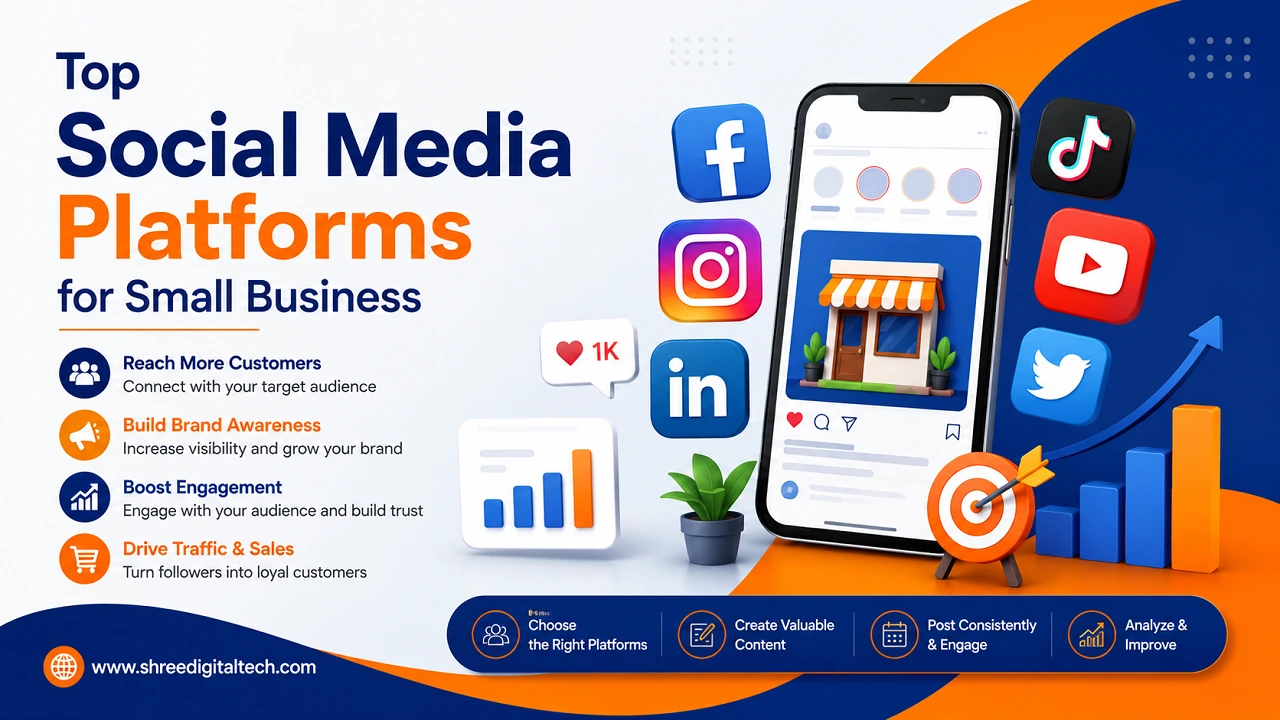
Being visible where your customers already are is essential to running a small business today, and social media is increasingly that place. But with so many platforms competing for your attention – Facebook, Instagram, TikTok, LinkedIn and more – it can be difficult trying to figure out where to invest your time and budget.
The good news? You don’t need to be on all the platforms. The best small business social media strategies rely on focus – choosing the one or two channels your audience actually uses, rather than attempting to be everywhere on every app. This guide looks at the best platforms, who they’re best for, and how to decide where your business should go first.
Why Small Businesses Should Care About Social Media
Before we move to picking a platform, let’s take a moment to understand why social media even has a place in your marketing plan. A large percentage of the world’s population is on social platforms and a large percentage of consumers say they find and research small businesses on social channels before buying. Social media is cheap to get going, it allows you to communicate with customers directly, and it provides you with detailed data on what is working, hard to obtain from a billboard or newspaper ad.
Visibility is great, but an active social presence builds trust. When a customer has a good experience with a brand online, they are more likely to tell their friends and family about it. This creates a chain reaction that is hard for traditional marketing to match.
Facebook: The Trusty All-Rounder
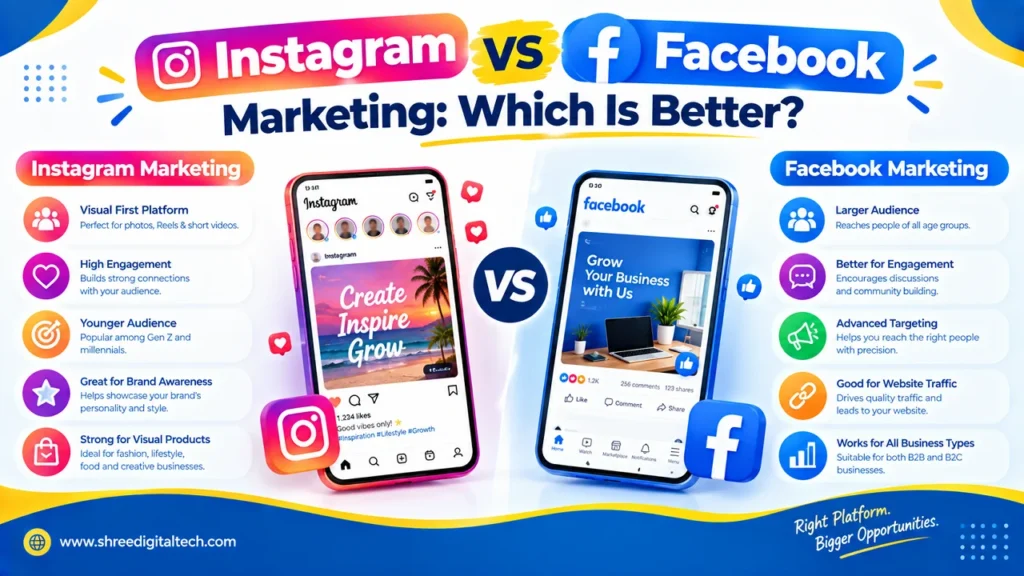
Facebook is the most extensive platform for small businesses, with billions of active users across nearly all age groups. It works especially well for local services, community-based businesses and B2C retail. Build your brand’s online hub easily with Business Pages, Groups, Events, and built-in customer reviews.
Facebook’s greatest strength is its advertising engine, which lets you target ads with remarkable precision by age, location, interests and purchasing behaviour. However, organic reach (free visibility) has gone down over the years, which means that most businesses need to spend money on ads to really get noticed. Still, whether you run a salon, or plumbing business, or a restaurant, Facebook is usually the safest place to start.
Instagram: The Visual Helper for Selling
If your product or service is visual (think food, fashion, beauty, interiors, or travel) Instagram is almost a must. It utilises Facebook’s ad infrastructure (both are owned by Meta) but also encourages organic, creative content, making it a great option even for businesses that don’t have a big ad budget.
Features like Reels, Stories, and shoppable posts help you showcase products and send traffic directly to your website or store. If you want to target younger people, Instagram is a natural fit because it tends to be more popular with people aged 18 to 34 than Facebook.
LinkedIn: The B2B and Credibility Platform
LinkedIn is the obvious choice for service-based, professional and B2B businesses — consultants, agencies, accountants, software companies. It’s built around professional identity, so the audience is more receptive to industry insights, case studies and thought-leadership content than they would be on a more casual platform.
LinkedIn is also a recruitment and networking site. Company Pages, articles, and groups allow you to build authority in your niche. LinkedIn’s ad targeting by job title and industry is more precise for B2B outreach than almost any other platform.
TikTok: The Discovery Engine
TikTok is one of the best ways to reach younger audiences, particularly Gen Z and younger millennials. It’s a short-form, algorithm-driven video format, so even the smallest accounts with no pre-existing following can go viral if the content is good.It’s a rare type of organic opportunity in today’s social media landscape.
This is especially successful for brands that are able to add some personality to their content: behind-the-scenes footage, quick tutorials, trends, and relatable humour tend to outperform polished ads. The issue is that it requires a steady stream of content, and the paid advertising tools are not as advanced as on Meta platforms.
YouTube: The Long Form Trust Builder
YouTube is a social platform and a search engine, which makes it a great tool for content marketing. Tutorials, product demos and explainer videos can continue to generate views — and leads — long after they’re published because YouTube content is indexed by Google and searchable years later.
The downside is the effort in production: Video requires more time and skill to create than a text post or photo. However, for businesses such as fitness coaches, educators and software companies where the demo builds trust, the investment usually pays off.
Pinterest: The Platform for Long-Lasting Content
Pinterest is more of a visual search engine than a “social” network, so it fits well with businesses related to home décor, fashion, weddings, recipes and DIY. A well-optimized Pinterest pin can keep bringing people to your website for months or years, unlike a tweet or Instagram post that disappears after a few days.
Its audience skews more toward users who are actively planning purchases, meaning that engagement on Pinterest usually turns into sales at a higher rate than on more entertainment-focused platforms.
X (formerly Twitter): Interaction in Real Time
X remains valuable for businesses that rely on real-time conversation — news, customer service, and industry commentary. Hashtags are an easy way for you to jump into trending conversations or find customers actively talking about a need your business can fulfil. It calls for posting a lot and responding quickly, so it is best suited for businesses that can consistently be active.
Other Platforms to Check Out
• WhatsApp Business: Ideal for direct, personalised communication with customers and for automating responses.
• Snapchat: Good if your audience is under 25 but not as business-friendly as other platforms.
• Threads: A new text-based platform that is beginning to become a place for off-the-cuff brand conversations.
• Google Business Profile: Not a traditional social network but a free, searchable listing that shows your location, hours and reviews right within Google Search and Maps – a must have for any local business.
Choosing the Right Platform for Your Business
Rather than trying to be everywhere, use these questions to help you improve your focus:
1. Where does your audience already hang out? Younger, visual audiences stick to Instagram and TikTok; LinkedIn is for professionals and B2B buyers; Facebook is known to reach broad, local audiences.
2. What would you like to achieve? Different platforms are more appropriate for brand awareness, lead generation, recruitment and community building.
3. What can you actually deliver in terms of content? If video production isn’t in the cards at the moment, go for platforms that reward images and text over YouTube or TikTok.
4. What resources do you have? If you’re a one-person operation, you’re likely better off mastering one or two platforms, rather than posting sporadically on five.
A competitor audit is also useful: see where your industry competitors are most active and engaged and start there.
Effective Handling of Multiple Platforms
Once you’ve selected your primary platforms, tools like Buffer, Hootsuite, Sprout Social and Metricool will allow you to schedule posts, track results and manage messages from one dashboard instead of switching between apps. Many have free plans or trials, so they’re accessible even to very small teams.
Final Thoughts
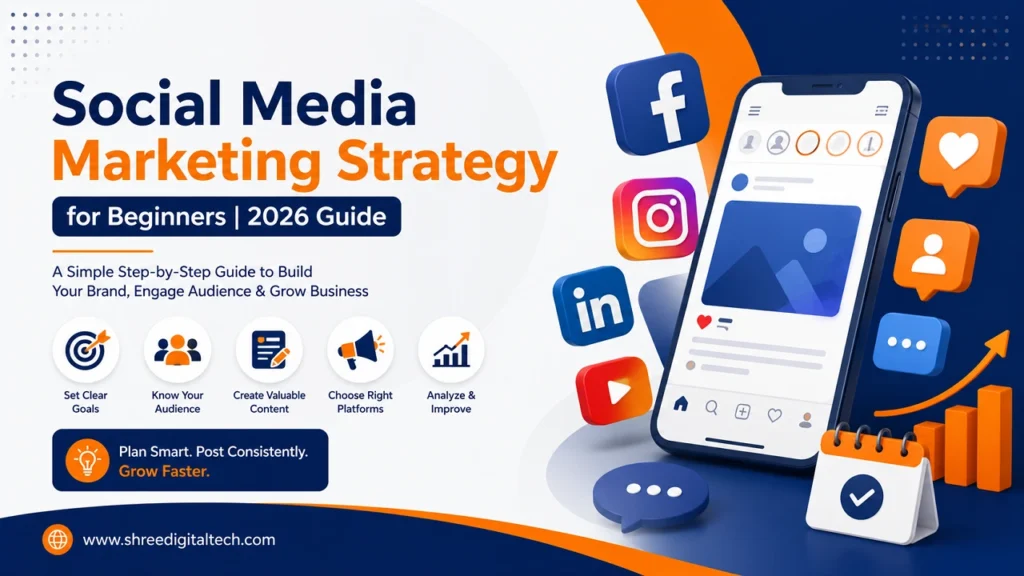
There is no “best” social media platform for every small business — only the platform that best matches your audience, content style and available resources. Begin with one or two channels where your customers are really present, post regularly and focus on real engagement rather than on the number of followers. As you build capacity you can grow on to other platforms with more confidence.
Frequent questions
1. Which online platform is best for small business?
Facebook is usually the safest place to start, with its massive user base and strong local targeting options. If your product is very visual, Instagram can be a strong first choice.
2. Do I have to be active on all social media sites?
No. Trying to be everywhere usually leads to inconsistent posting and weaker results. Better to dominate a couple of platforms where your target audience is actually there.
3. What is the best platform for B2B businesses?
For B2B companies, consultants and professional services, LinkedIn is typically the best option, as it is a business-oriented platform with very specific targeting for job titles and industries.
4. What is the Instagram 80/20 rule?
According to the 80/20 rule, about 80% of your content should be valuable, entertaining, or informative. The other 20% can be more product, service or brand orientated.
5. How frequently should a small business post on social media?
It’s not about how often you do it, it’s about consistency. Many small businesses do well post 3-5 times a week per platform. But when in doubt, post less often and keep the quality up, rather than post every day and burn out.
6. Do I need a budget for paid advertising to succeed on social media?
Not really, but organic reach has declined on Facebook and other sites, so even a small ad spend can help to increase visibility. Organic opportunities are still meaningful on platforms like Instagram, Pinterest and TikTok.
What is the easiest way to manage multiple social accounts?
Tools like Buffer, Hootsuite or Metricool for social media management can save you a lot of time compared to managing each account manually, by letting you schedule posts and monitor performance across multiple platforms from a single dashboard.